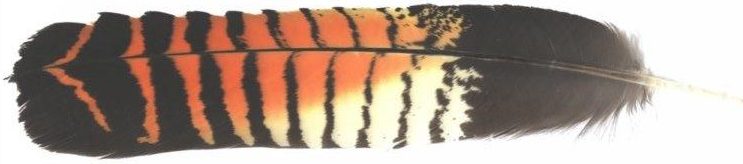
During the process of typology development, several clusters were identified as degraded communities – not representing a recognisable natural community. Work on these is ongoing and the names are all preliminary. Here we organise them according to their corresponding region
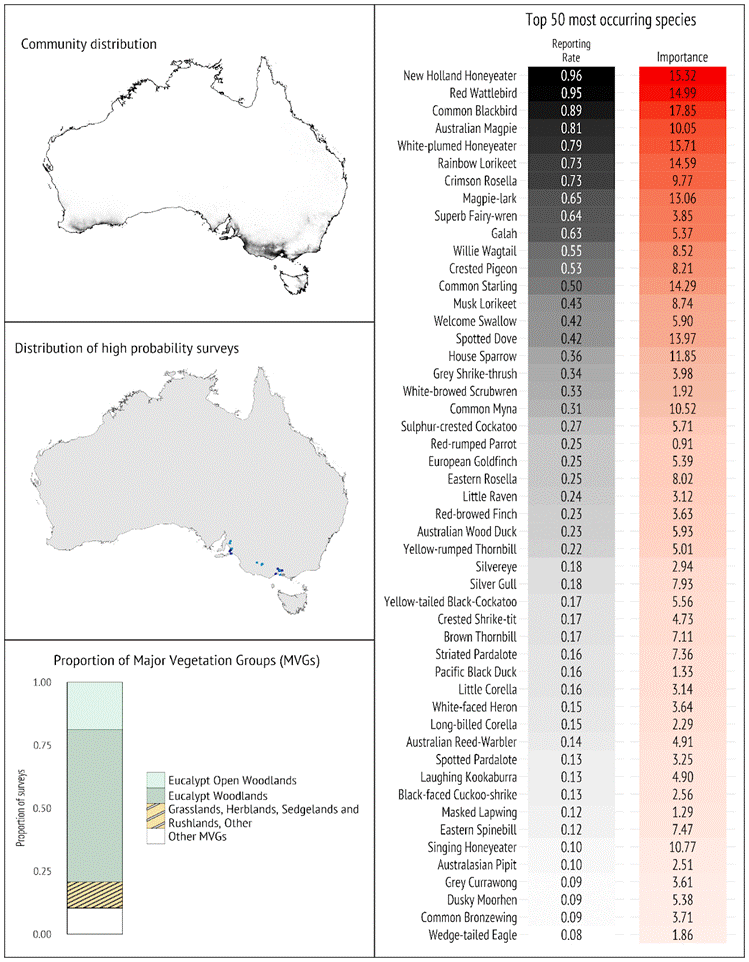
Region A3: South-eastern Woodland
Degraded 4
A largely urban cluster with sites in Melbourne and Adelaide, high reporting rates of introduced species and native species commensal with humans.
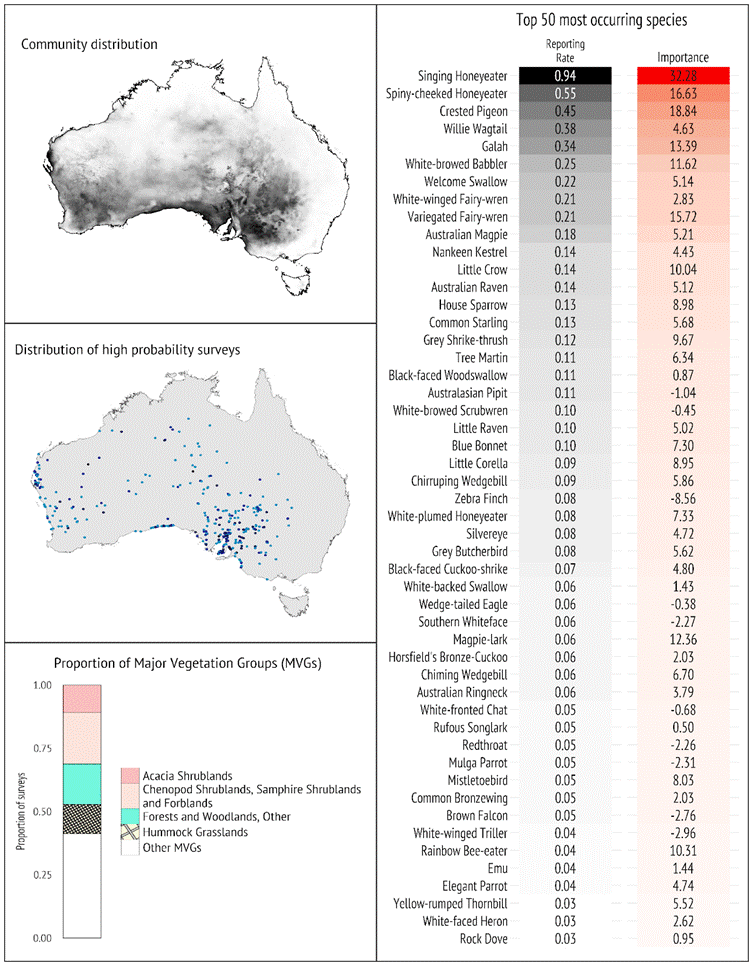
Region C: Arid Zone
Degraded arid shrubby woodland
A cluster dominated by generalists and introduced species, likely common around water points and homesteads in the arid zone.
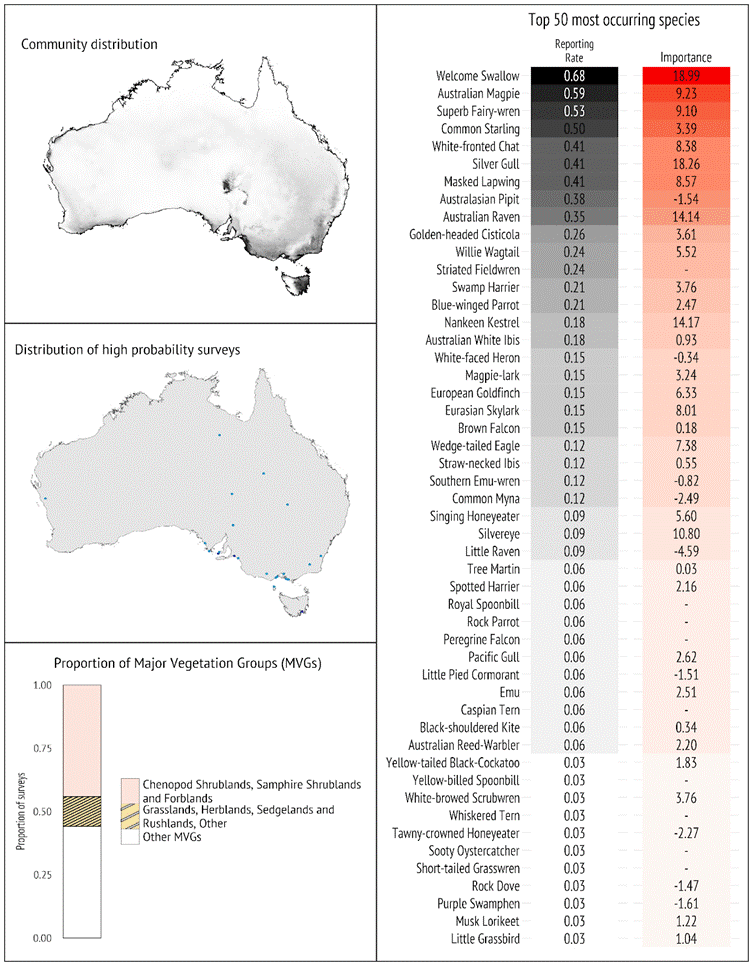
Region D: Inland eastern woodland
Degraded 2
A simplified community with open country generalists and introduced species most common, occurring near inland salt lakes and coastal areas with chenopods and pasture.
Degraded Noisy Miner 1
The community that co-occurs in noisy miner-dominated areas particularly around the east coast capital cities; all sites in this cluster included noisy miners, and smaller bird species were uncommon.
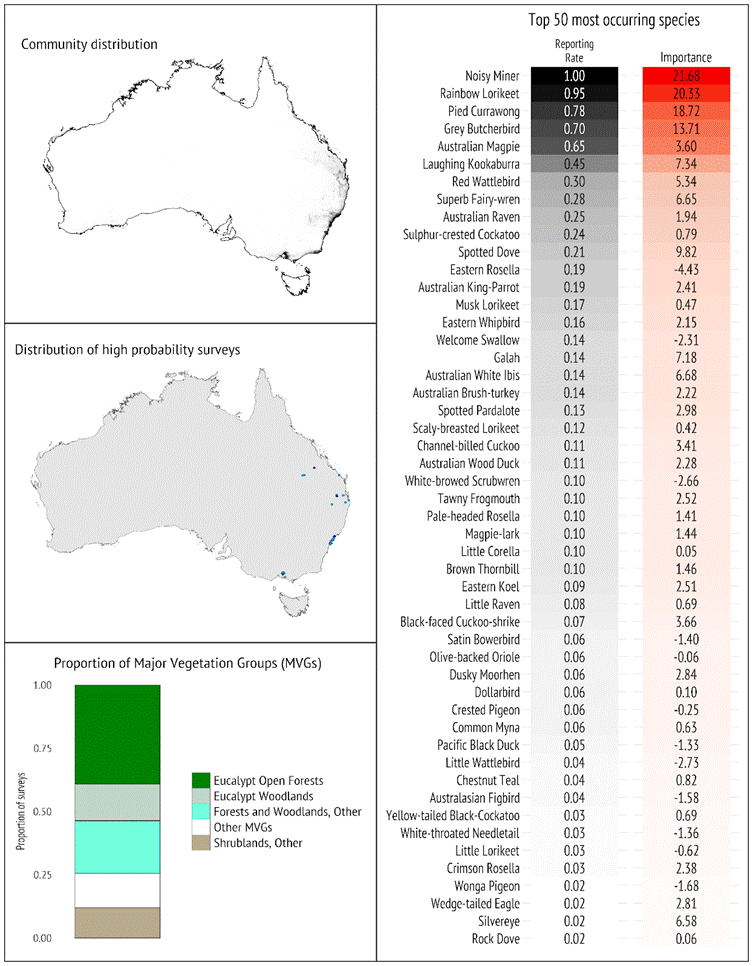
Degraded Noisy Miner 2
The typical degraded community of eucalypt woodland areas of eastern Australia that are dominated by noisy miners, primarily comprising large-bodied generalists and very few small-bodied species.

Degraded Yellow-throated Miner
The typical degraded community of inland areas where yellow-throated miners dominate, comprising predominantly large-bodied generalist species and very few small-bodied species.


